Blog / local AI
Cloudflare's Deno acquisition is a signal: the local AI stack is becoming the default, not the fallback
Cloudflare acquiring Deno—specifically to improve self-hosting—confirms that self-hostability is becoming a competitive requirement across the AI infrastructure layer.
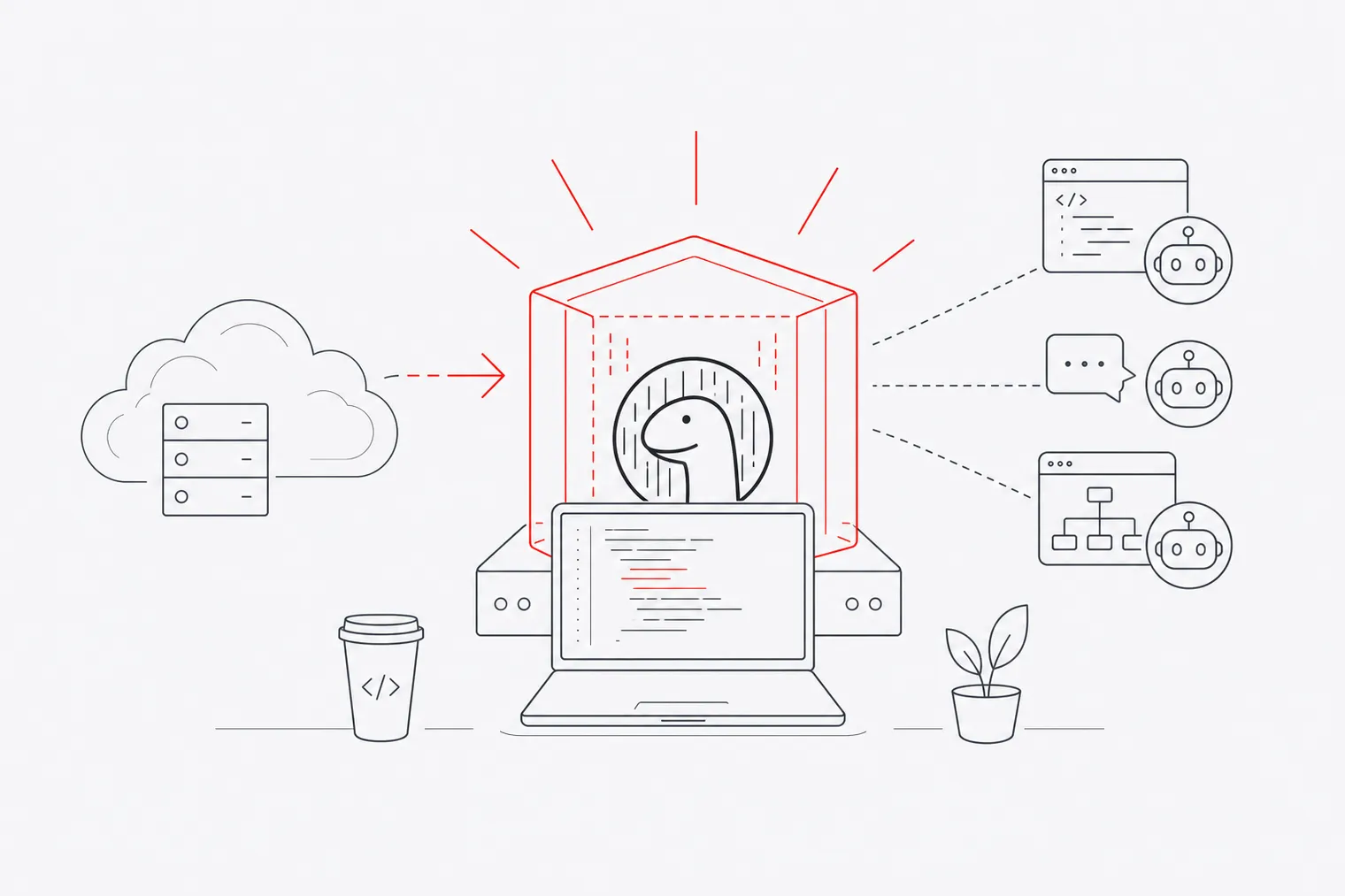
Cloudflare acquiring Deno is not a routine acqui-hire. Announced October 9–10, 2026, the deal is specifically about merging Deno's open-source celld — an open-source implementation of Workers — with Cloudflare's workerd runtime. The stated goal: make Workers and Durable Objects easier to self-host outside Cloudflare's own network. A hyperscaler-adjacent platform is actively investing in making its core runtime portable away from itself. That is worth paying attention to.
It follows Cloudflare's June 2026 acquisition of VoidZero, the team behind Vite, Vitest, Rolldown, and Oxc. Two acquisitions in under six months, both open-source-first dev tooling shops. That is not a coincidence.
What Cloudflare Is Actually Saying With These Deals
When a platform the size of Cloudflare buys an open-source runtime team specifically to improve self-hosting, it is not doing charity. It is responding to where developer demand is heading.
TechCrunch's coverage of the Deno acquisition frames it as blurring the line between managed edge platform and self-managed runtime. CodeGangsta's analysis goes further, reading it as Cloudflare acknowledging that the boundary between "run this on our network" and "run this on your own infrastructure" is dissolving — and that trying to hold that line is a losing strategy.
VoidZero tells the same story from the tooling side. Cloudflare is not building a walled garden of proprietary build tools. It is buying the open-source teams that already have developer trust and folding them in rather than replacing them with something closed.
The common thread: self-hostability is becoming a feature platforms have to offer, not a concession they make reluctantly.
The Broader Local AI Stack Movement
This shift is not isolated to edge compute. The same thing is happening across the AI infrastructure layer.
Ollama's rise is the clearest example — a single command to pull and run a local model, no API key required, no usage meter running. The homelab AI stack in 2026, as documented in the dev.to Signal Weekly piece on what self-hosters are actually running, looks nothing like 2023's "just call the OpenAI API." Local model runtimes, self-hosted vector stores, and on-premise orchestration are now table stakes for serious homelab setups.
At the enterprise end, getmaxim.ai's analysis of self-hosted AI gateways in 2026 identifies three forces pulling LLM traffic back inside the perimeter: regulatory pressure on where prompt data can travel, the sensitivity of prompts themselves in production agentic workflows, and the economics of agentic loops — where a single runaway agent can generate thousands of API calls and a bill that arrives before anyone notices.
That last point deserves more attention than it typically gets. Agentic workflows are not like single-shot completions. An agent that can spawn subagents, retry on failure, and loop across tool calls can burn through API budget in minutes. At scale, the case for self-hosted inference or a self-hosted gateway is not ideological — it is financial.
Why AI Coding Agents Specifically Are Affected
The forces pushing edge compute and LLM infrastructure toward self-hostable models apply with extra intensity to AI coding agents. Three reasons:
API key custody. A coding agent that can write and execute code needs access to services — APIs, databases, external tools. If the agent runtime lives in a cloud sandbox you do not control, your real API keys either travel to that environment or you build an awkward proxy layer around it. Neither is clean. The natural solution is to keep key custody on infrastructure you own and let the agent runtime operate with scoped, temporary credentials it cannot exfiltrate.
Spend control. Agentic coding tasks are long-horizon. Writing, testing, debugging, and iterating across a codebase can spawn dozens of model calls, tool invocations, and subagent loops in a single session. Without hard per-sandbox spend caps enforced at the infrastructure level, cost overruns are not a hypothetical — they are a matter of when, not if.
Compliance and data residency. Code often contains proprietary logic, internal API schemas, and business-sensitive context. Sending that to a third-party cloud sandbox for execution introduces data residency questions that many teams cannot answer cleanly. Running the execution environment on your own infrastructure sidesteps the question entirely.
What the Self-Hostable Coding Agent Layer Looks Like
Directionally Local is a concrete example of what building for this from the start — rather than retrofitting it — actually looks like.
Autopilot is a terminal-based coding agent and programmable SDK that runs on your own key with 25+ providers, OpenRouter's 400+ models among them, or any OpenAI-compatible endpoint. You bring your own model routing. No lock-in to a single provider's inference, no platform margin on every token.
Hotcell is the sandbox layer beneath it. It spins up isolated microVMs or containers on your machine so agent subagents run in a contained environment. Real API keys stay on the host. The agent gets scoped credentials that cannot be read or exfiltrated from inside the sandbox. Kernel-level default-deny egress means a subagent cannot make unexpected outbound calls. Per-sandbox spend caps mean a runaway loop hits a ceiling before it hits your credit card.
The contrast with cloud-only sandboxing is instructive. E2B, for example, is cloud-only by default, with a Pro tier at $150 per month plus per-second compute charges on top. That pricing model makes sense for occasional, short-lived sandbox tasks. It makes less sense for long-horizon agentic coding work where a single session might run for minutes, spawn multiple subagents, and iterate across dozens of tool calls. The economics shift fast.
Update, 19 October 2026: we've since released Serverless Objects v0.1, which builds on the exact piece this deal is about. It runs Cloudflare Workers and Durable Objects apps on your own hardware using celld, Deno's open-source runtime, and adds the operating layer around it: a CLI, TLS ingress and a local dashboard. It's pre-alpha and single-host for now, and gives agents durable state, scheduled wakeups and long-lived connections without a cloud dependency.
More importantly, cloud-only means the three problems above — key custody, spend control, data residency — remain the user's problem to solve on top of the platform. Self-hosted means those problems are addressed at the infrastructure level, by design.
The Consolidation Pattern Will Continue
Cloudflare buying Deno and VoidZero in the same year is not the end of this pattern. It is the beginning of a visible phase of it.
Open-source-first infrastructure teams have something large platforms struggle to build internally: developer trust. When a tool wins on GitHub and in the homelab community before it wins in the enterprise, it carries a credibility that no product announcement can replicate. Platforms that want self-hostable credibility are going to keep acquiring the teams that already have it, rather than trying to manufacture equivalent trust from scratch.
For teams evaluating AI agent infrastructure right now, the practical implication is straightforward: treat self-hostability as a first-class requirement, not something to retrofit later. The compliance question, the cost control question, and the vendor lock-in question all get harder to answer after you have built a production workflow on top of a cloud-only runtime. They are much easier to answer if you start on infrastructure you control.
Cloudflare is not leading this movement — they are following developer demand and acquiring their way into alignment with it. That is actually the stronger signal. When a large platform changes its strategy to match where independent developers are already going, the direction is confirmed.
FAQs
What does "self-hosted AI stack" mean for a development team?
It means running the components of your AI workflow — model inference, agent execution, sandboxing, API gateways — on infrastructure you control, rather than relying entirely on third-party cloud services. This gives you direct control over data residency, costs, and API key custody.
Why does Cloudflare acquiring Deno matter for the self-hosted AI trend?
The acquisition is specifically aimed at making Cloudflare's Workers and Durable Objects runtime easier to self-host outside Cloudflare's network. A major platform investing in portability away from itself signals that self-hostability is becoming a competitive requirement, not a niche feature.
What are the main risks of running AI coding agents in cloud-only sandboxes?
The three main concerns are API key exposure (your credentials travel to an environment you do not control), runaway spend from agentic loops (per-second billing with no hard caps), and data residency (proprietary code and business logic processed outside your perimeter).
How does Hotcell handle API key security for agent subagents?
Hotcell spins up isolated microVMs or containers on your own machine. Real API keys stay on the host. Subagents receive scoped, temporary credentials and cannot read or exfiltrate the underlying keys. Kernel-level default-deny egress prevents unexpected outbound connections from inside the sandbox.
Can Autopilot work with models other than OpenAI's?
Yes. Autopilot runs on your own key with 25+ providers, from OpenRouter and Anthropic to local Ollama, or any OpenAI-compatible endpoint. You are not locked to a single provider — you can route to open-weight models, self-hosted inference, or any commercial API that follows the OpenAI interface.
Is the self-hosted AI trend mainly about compliance, or are there other drivers?
Compliance is one driver, but the economics of agentic workflows are increasingly important. Long-horizon agent tasks can generate thousands of API calls in a single session. At that scale, the cost difference between cloud-hosted inference and self-hosted or locally-routed inference becomes significant quickly.
Should teams building on AI agent infrastructure prioritize self-hostability now?
Yes. Retrofitting self-hostability onto a workflow built around cloud-only runtimes is significantly harder than starting with infrastructure you control. The compliance, cost, and vendor lock-in questions are much easier to answer before you have production dependencies on a specific platform.
The direction is clear. Self-hosted AI infrastructure is where the market is heading, and the acquisitions happening right now are confirmation, not prediction. To see what the self-hostable coding agent layer looks like in practice, start at directionallylocal.com.